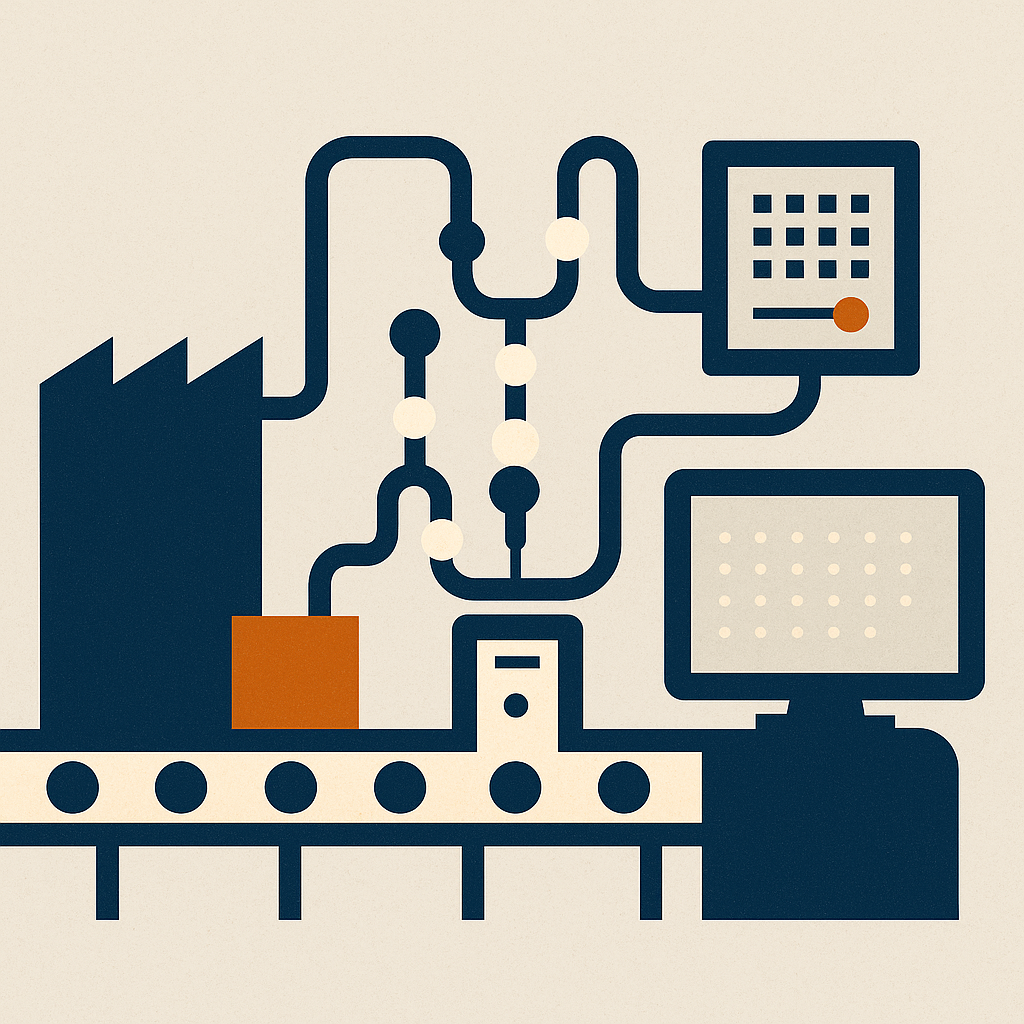
We’ve spent decades building cloud platforms that scale infinitely — yet our modernization processes still rely on craftsmanship. It’s time to industrialize the way we modernize.
1. The Craft Era of Modernization
Every engineering discipline eventually outgrows its craft phase. Cars stopped being hand-built when precision demanded consistency. Aviation left behind tinkering when flight required safety.
But enterprise modernization? It’s still artisanal.
Every migration feels custom-made — handcrafted scripts, one-off validations, and heroic engineers keeping projects alive through sheer expertise. We celebrate the “migration heroes” who pulled it off at 3 AM. But that isn’t progress — that’s fragility dressed as achievement.
If your modernization success depends on individuals instead of systems, you’re not scaling. You’re improvising.
2. The Hidden Cost of Hand-Built Migrations
Artisanal modernization comes with an invisible tax:
- Inconsistency: No two migrations follow the same pattern.
- Rework: Each project rediscovers the same edge cases.
- Opacity: No telemetry means no learning curve.
- Risk: When knowledge is tribal, failure is personal.
Before the assembly line, early carmakers could produce a few vehicles a month — all slightly different, all expensive. That’s where most modernization programs are today: a small workshop with smart people and no reproducibility.
For enterprises, this means that even after investing millions, outcomes remain unpredictable. Every modernization is a first-time experiment — again.
3. The Missing Factory Model
Imagine if modernization worked like a production line. Inputs would arrive in standardized formats; processes would follow sequenced steps; quality checks would validate every output.
A migration factory would have stations for:
- Extraction: gathering metadata, code, and lineage.
- Discovery: classifying complexity and mapping dependencies.
- Conversion: translating logic to target platforms.
- Validation: verifying accuracy and performance.
- Reconciliation: ensuring data parity and audit readiness.
Each phase would operate under controlled conditions — observable, repeatable, improvable. That’s industrialization: outcomes by design, not by effort.
4. Why Most Organizations Stay Artisanal
If industrialization sounds obvious, why doesn’t it happen?
- Cultural inertia: teams equate repeatability with rigidity.
- Tool sprawl: dozens of partial utilities, none integrated.
- Missing telemetry: no metrics for throughput or quality.
- Talent myths: overreliance on “experts” instead of systems.
We’ve been trained to see modernization as craftsmanship — a space for skilled artisans who know every nuance. But that mindset keeps us trapped in bespoke chaos.
The future belongs to teams who can design systems of migration, not just execute migrations within systems.
5. What Industrialized Modernization Looks Like
In a mature enterprise, modernization should look like this:
Factory Function
Modernization Equivalent
Standardized Inputs
Unified metadata exports, manifests, and lineage graphs
Defined Workstations
Distinct phases with controlled handoffs (Extract → Discover → Convert → Reconcile)
Quality Gates
Syntax, semantic, and reconciliation validations
Telemetry
Live logs, progress dashboards, performance metrics
Continuous Improvement
Feedback loops between phases for defect reduction
Instead of one big “go-live,” modernization becomes a continuous manufacturing line — producing validated, ready-to-deploy workloads every cycle.
This isn’t rigidity; it’s control. And control is the foundation of confidence.
6. From Heroic Projects to Engineered Programs
When modernization is artisanal, progress depends on people. When it’s industrialized, progress depends on design.
The next generation of modernization leaders won’t be those who “migrated fastest.” They’ll be the ones who can replicate success predictably, across hundreds of workloads, with traceability and governance intact.
Industrialization doesn’t erase craftsmanship — it channels it. It lets experts focus on innovation instead of re-work. It transforms modernization from an art into an engineered system.
Because the future of modernization isn’t heroic. It’s industrial.